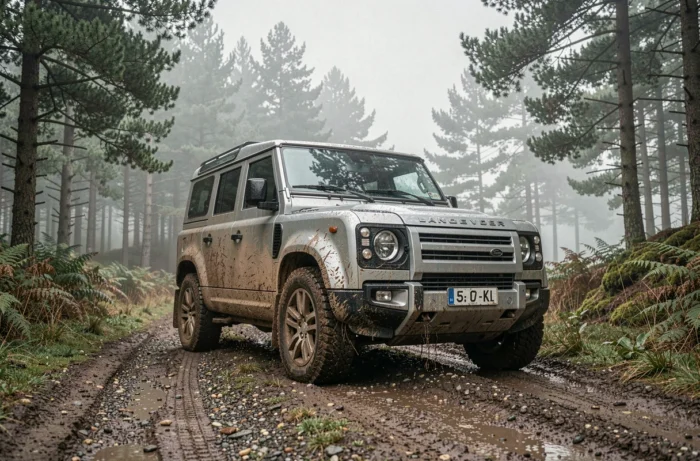
The reliability of Land Rover fuels passionate debates among satisfied owners and former disappointed customers. The available technical data paints a more nuanced picture than the simple label of “fragile brand” often attached to the British manufacturer.
Technical inspection in France: what the re-inspection rates of the Range Rover reveal
Before discussing reputation, let’s look at the figures from the French technical inspection. The UTAC-OTC data allows for comparisons between generations of Range Rover and, importantly, situates them against the national average.
The most recent generation analyzed, the Range Rover IV, has a re-inspection rate of 11.1%, well below the national average of 18.9%. This result places this model among the top performers in its category, across all brands.
In contrast, the Range Rover II rises to 28%, above the average. Its identified weak point: the suspension. The Range Rover III stands at 21.8%, within the average, with the chassis as its Achilles’ heel. To better understand the reliability of Land Rover through its various generations, one must accept that each model tells a different story.
Have you ever noticed that the most vehement criticisms often concern models over ten years old? It makes sense: a Range Rover II or III today is between fifteen and twenty-five years old. Its condition depends as much on the maintenance it has received as on its original design.
Land Rover 2.0 petrol and diesel engines: documented failures
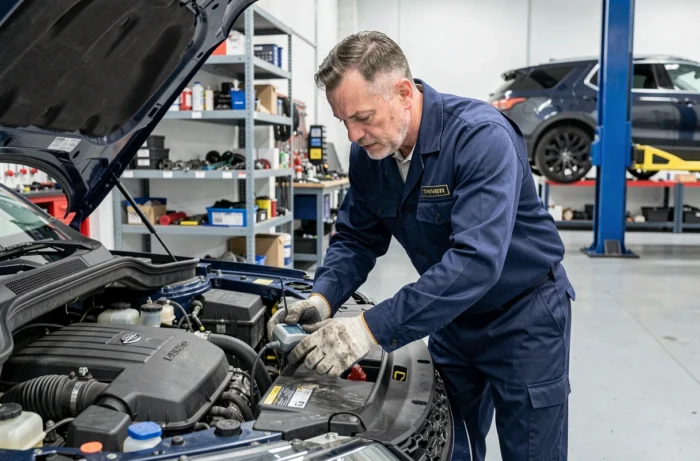
A manufacturer’s reputation often hinges on a specific component. For Land Rover, the 2.0-liter petrol and diesel engines concentrate the bulk of complaints. These engines, shared with Jaguar, have been the subject of recurring reports of engine failures in series.
The 2.0 diesel has posed distribution and turbo issues in certain model years. The 2.0 petrol, on the other hand, has suffered from overheating and abnormal oil consumption. The 3.0 diesel, in comparison, has proven more robust, although it is not free from weaknesses in the electronic department.
For a discerning driver, the choice of engine is not a detail. Here are the points to check before any used purchase:
- The complete maintenance history, with invoices for the replacement of the timing chain if the vehicle exceeds 100,000 km
- The presence of white or blue smoke on cold start, a sign of worn head gaskets or oil consumption
- The operation of the turbo under load, by testing the vehicle on the highway and not just in the city
- The software updates applied at the dealership, as some electronic failures have been corrected by software patches
Hybrid engine: a more reliable option?
The recent plug-in hybrid versions use a different architecture. The thermal engine is less stressed on a daily basis, which mechanically reduces wear. The electric mode handles short trips, which are the most taxing on a diesel (clogging of the particulate filter, incomplete regeneration cycles).
This configuration does not eliminate all risks, but it changes the game for urban drivers.
Land Rover ranked the most reliable premium brand in China in 2026
Why mention the Chinese market? Because J.D. Power reliability studies produce results that surprise European motorists.
In 2026, Land Rover ranks first among premium brands in the J.D. Power China Vehicle Dependability Study. Porsche and BMW follow behind. The Discovery Sport and the Range Rover are among the most reliable models in their segment in this study.
This does not mean that the Land Rovers sold in Europe are identical in every way. Production conditions, parts suppliers, and maintenance networks differ. But these results show that the design of recent models has improved, and that the reputation for fragility inherited from the years 2010-2018 does not necessarily reflect the current state of the lineup.

Land Rover maintenance costs: the real barrier for discerning drivers
Reliability is not only measured in breakdowns. A vehicle can never break down and still be expensive to maintain. For Land Rover, the price of parts and labor remains significantly higher than that of a mainstream SUV from Toyota or Renault.
A standard service at a Land Rover dealership costs significantly more than an equivalent service on a competing SUV. Tires, brake pads, and air suspension (found on most Range Rovers) add to the bill.
For a driver comparing a Defender to a Toyota Land Cruiser, this maintenance cost can represent a significant annual budget, even if the vehicle never breaks down.
Warranty and extension: a safety net to consider
The warranty extensions offered by the official network generally cover major components (engine, transmission, onboard electronics). On a recent used vehicle, a warranty extension can absorb the financial risk of a serious breakdown. The calculation deserves to be made before the purchase, especially on the 2.0 engines that have a documented history of failures.
A recent, well-maintained Land Rover covered by an extended warranty is not the financial black hole described in forums. An older Land Rover bought at a bargain without a maintenance history, however, can quickly become one. The specific model, the chosen engine, and the care taken by previous owners weigh more than the logo on the hood.