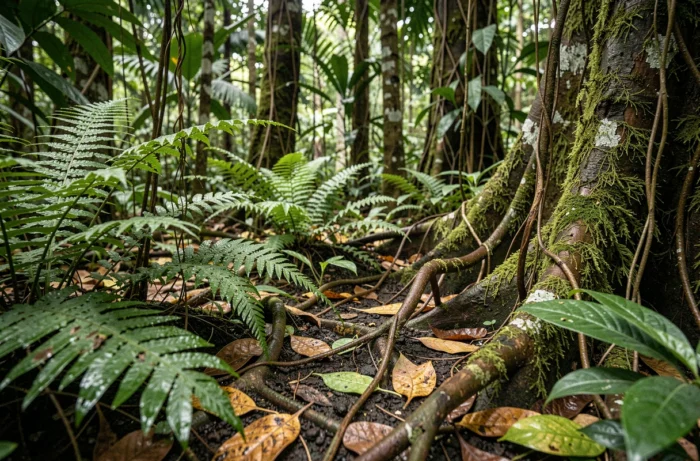
Walking on a trail in Soufrière or exploring the underbrush of Les Saintes, you never encounter a viper, never a fer-de-lance, never a boa. Guadeloupe is known as an island without snakes. The reality is more nuanced: there are indeed colubrids living there, but they are so discreet and so threatened that they have faded from collective consciousness.
Endemic colubrids of Guadeloupe: real species but nearly invisible
Four species of snakes live naturally in Guadeloupe. They are small colubrids, completely harmless, found throughout the archipelago, particularly around Soufrière and Les Saintes.
Among them, the large colubrid and the small colubrid are endemic, meaning they are found nowhere else on the planet. Their modest size, nocturnal behavior, and forest habitat explain why one can spend years in Guadeloupe without seeing a single one.
These colubrids have nothing in common with the trigonocéphale of Martinique or the boas found in South America. None of them pose a danger to humans. Confusing them with imported venomous snakes, as sometimes happens on social media, fuels an unjustified fear that directly harms their protection. When one looks into the wildlife in Guadeloupe, it quickly becomes clear that this perceived absence masks a fragile natural heritage.
Concrete threats to Guadeloupe’s snakes: mongooses, feral cats, and forest fragmentation
The introduction of the mongoose in the 19th century to combat rats in sugarcane plantations had disastrous consequences for terrestrial reptiles. The mongoose is a formidable predator for small colubrids, which it easily spots and captures in the forest litter.
Feral cats (cats returned to the wild) exert additional pressure. Their population remains difficult to estimate, but they are observed in the same habitats as the endemic colubrids.
In addition to these introduced predators, the reduction of wooded areas is a concern. Each clearing, each urban expansion reduces the movement corridors of these already rare species. Endemic colubrids need continuous forest cover, with moist litter and rocky shelters. When their habitat is fragmented, it isolates already small populations, accelerating their genetic decline.
Why confusion with imported snakes worsens the situation
Exotic reptiles (boas, pythons) are sometimes discovered in Guadeloupe, abandoned by owners who do not understand the constraints of such animals. In 2018, a video showing a young man with a snake found in Saint-François circulated on social media. It was very likely an imported reptile.
This type of event provokes a rejection reaction towards all snakes, including the indigenous colubrids. Protected species are sometimes killed by locals who mistake them for dangerous snakes.
Regulations on the possession of exotic snakes in Guadeloupe
The possession of non-domestic snakes in France (including overseas departments) is regulated by the decree of August 10, 2004, which was largely reorganized by the decree of October 8, 2018. This text modified the thresholds for prefectural authorizations, the obligations for capacity certificates, and the possession registers.
In practical terms, owning a boa or a python in Guadeloupe is not something to be taken lightly. Here’s what the regulations require:
- A capacity certificate issued by the prefecture, attesting to the holder’s knowledge of the species concerned
- A prefectural authorization for opening an establishment, even for an individual owning a single animal above certain thresholds
- The maintenance of an entry and exit register for the animals, with individual identification
- Criminal penalties in case of abandonment or release into the wild, which have been tightened in recent years
Abandoning an exotic snake in the wild constitutes a criminal offense that exposes one to prosecution. Cases of boas found in urban areas, occasionally reported in the local press, illustrate the failures of this framework when it is not respected.
National Action Plan 2026-2031: what changes for endemic reptiles
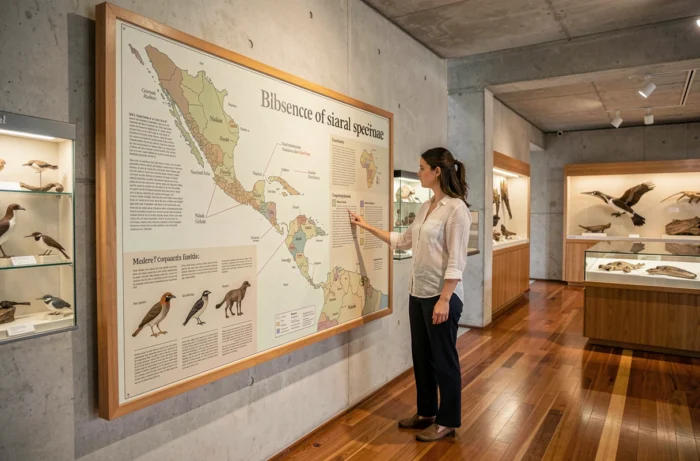
A National Action Plan (PNA) titled “Skinks, colubrids, and geckos threatened in Guadeloupe and Saint-Martin” has been launched for the period 2026-2031. This plan structures its interventions around three axes:
- Improving knowledge about the distribution and dynamics of endemic colubrid populations
- Management and conservation actions, particularly combating invasive species in areas with high densities of indigenous reptiles
- Public awareness to change the perception of local snakes
This PNA represents the first action framework specifically dedicated to terrestrial reptiles in Guadeloupe. Until now, endemic colubrids had a theoretical protection status, but without a coordinated operational program at the territorial level.
The challenge of local awareness
This touches on the central issue. As long as the majority of Guadeloupeans associate the word “snake” with danger, endemic colubrids will remain victims of their bad reputation. Responses vary on this point depending on the municipalities and generations, but the reflex to kill a snake seen in a garden remains widespread.
The awareness component of the PNA plans interventions in schools and tailored communication materials. Making the small colubrid and the large colubrid known by their names rather than the generic term “snake” could change the game.
Guadeloupe is not an island without snakes. It is home to unique endemic colubrids, threatened by mongooses, feral cats, habitat loss, and the unjustified fear they inspire. The PNA 2026-2031 offers a framework, but its success will largely depend on what happens on the ground, in gardens and on trails, when one encounters a discreet small colubrid instead of confusing it with what it is not.