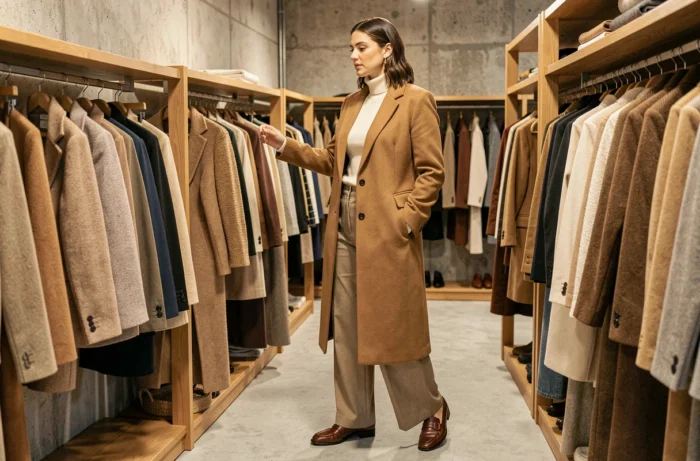
What criteria allow us to distinguish a truly wearable women’s fashion trend for 2024 from a runway effect without a future? Between the omnipresent stripes, the return of powder pink, and the rise of utilitarian style, the proposals from the spring-summer 2024 shows cover a wide spectrum. However, not all of them are equal in terms of longevity, adaptability to different body types, or cost per wear.
This article compares the most visible women’s fashion trends for 2024 according to three concrete axes: everyday versatility, compatibility with an existing wardrobe, and recent regulatory constraints on sustainability claims.
Comparison of spring-summer 2024 fashion trends based on their wearability
The shows highlighted about ten stylistic directions for the spring-summer 2024 season. Not all of them present the same potential for everyday adoption. The table below ranks the most recurring trends on the runways based on their ease of integration into an existing wardrobe.
| Trend | Relevant Pieces | Everyday Versatility | Required Investment |
|---|---|---|---|
| Stripes | Breton tops, trousers, blazers | Very high | Low (pieces already present in most wardrobes) |
| Utilitarian style | Cargo jackets, overalls, patch pockets | High | Moderate (a cargo jacket is enough to steer a look) |
| Ultra short (mini skirts, micro shorts) | Skirts, shorts, dresses | Limited (casual or evening context) | Low to moderate |
| Transparency | Organza shirts, voile dresses | Low (requires layering and suitable context) | Moderate to high |
| Powder pink / lilac | Tops, dresses, accessories | High | Low (an accessory or a top is enough) |
| Drapes / Greek goddess | Long dresses, asymmetrical tops | Medium (more event-oriented) | High (elaborate cuts, fluid materials) |
Stripes and utilitarian style stand out clearly: these two trends work with pieces already owned by the majority of women. Transparency and drapes, on the other hand, require specific purchases and a more restricted wearing context.
Specialized resources like Allure Mode help identify how these trends translate into accessible pieces, far from just runway looks.
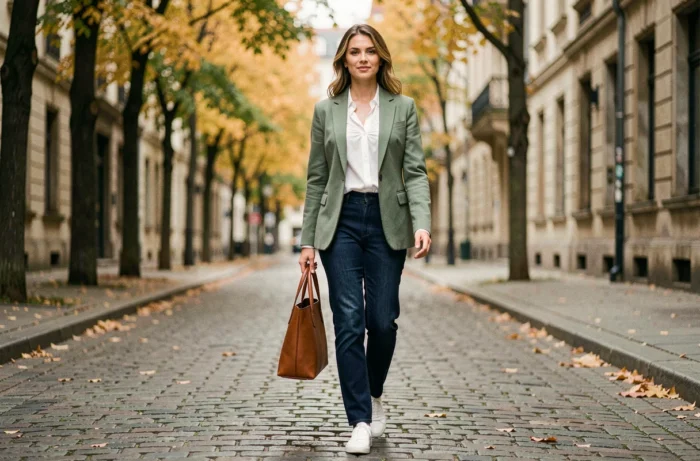
Colors and patterns in women’s fashion 2024: what lasts beyond the season
The spring-summer 2024 palette oscillates between two poles. On one side, soft shades (powder pink, lilac, sandy beige) that fit into a wardrobe of neutral colors. On the other, graphic patterns (wide stripes, polka dots) that make a stronger statement.
Soft colors versus graphic patterns
Pastel colors have a measurable advantage: they combine with almost all basic pieces (raw denim, black trousers, navy blazers). A lilac top or a powder pink scarf changes the tone of an outfit without disrupting its structure.
Floral patterns and polka dots, very present on the runways, pose a different problem. A strong pattern limits the possible combinations in a restricted wardrobe. Wearing a polka dot shirt requires a solid bottom and discreet accessories, which reduces flexibility.
Stripes are a special case: they behave almost like a basic. A classic Breton top works equally well with jeans or a midi skirt, in any season. It is the only patterned trend that maintains true stylistic durability beyond spring 2024.
Body types and adaptation tips for 2024 trends
Competing articles often list trends without addressing their compatibility with different silhouettes. The question deserves to be asked: not all key cuts of the season suit all body types.
Mini skirts and ultra short: for which silhouettes
The ultra short trend, showcased by Gucci and Miu Miu on the runways, visually works on elongated silhouettes. For other body types, the midi skirt offers the same trendy effect with more universal flattery. The midi skirt remains one of the most versatile pieces of the season: it adapts to both casual and dressed-up styles.
Utilitarian style: an ally for all body types
Cargo jackets and utilitarian cuts have a rarely mentioned advantage: their straight lines and structured pockets create visual balance on most silhouettes. Unlike drapes, which require a certain ease with fluid materials, utilitarian style forgives proportion discrepancies.
- A cargo jacket worn open over a fitted top structures the silhouette without constraining it
- Patch pockets at hip height add volume where some body types lack it
- Thicker materials (twill cotton, heavy linen) hold their shape better than fine jersey throughout the day

Sustainability claims in fashion: what changes in September 2026
An external factor to fashion itself is changing the way pieces are chosen. The European directive 2024/825, known as the Empco directive, prohibits vague environmental claims starting September 27, 2026. Terms like “eco-friendly,” “sustainable,” or “green” will no longer be allowed on products sold in the European Union without verifiable proof.
In practical terms, self-awarded sustainability labels from fashion brands will disappear. Only labels established by a public authority or based on an independent certification scheme with third-party verification will be permitted.
For a consumer building her 2024 style while seeking durable pieces, this changes the framework. Verifiable certifications replace generic marketing promises. The European Ecolabel or Oeko-Tex certifications are reliable benchmarks, unlike the in-house pictograms that many brands still use.
- Check for the presence of a label certified by an independent organization before purchasing a piece presented as responsible
- Beware of terms like “conscious collection” or “eco-line” without reference to a specific standard
- Favor materials with documented traceability (European linen, GOTS certified organic cotton)
The most wearable women’s fashion trends for 2024 (stripes, utilitarian, pastel colors) are also those that require the least new purchases. The most durable piece remains the one that already exists in the wardrobe, combined differently.