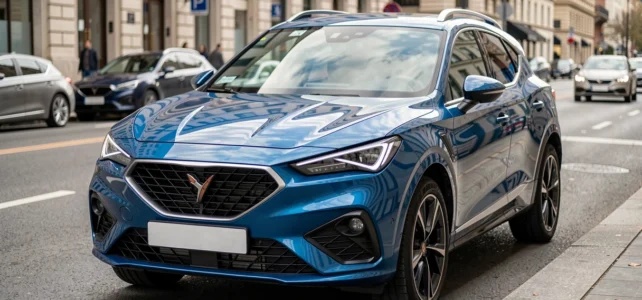
The Cupra Formentor occupies a unique place in the compact SUV segment. Neither an elevated sedan nor a fully-fledged off-roader, this model from the Spanish brand offers a sporty positioning that raises a recurring question among buyers: does comfort truly follow, beyond the displayed driving pleasure?
Dynamic Chassis Control (DCC): Real Behavior on Long Highway Trips
Press tests of the Cupra Formentor mainly focus on dynamic handling and lap times. The cruising behavior over several hundred kilometers of highway remains under-documented.
On versions equipped with the DCC adjustable suspension set to Comfort mode, the filtering of irregularities is surprising. Expansion joints, road connections, degraded surfaces: the feedback in the cabin remains cushioned, without harshness. This level of comfort brings the Formentor closer to a touring car rather than a circuit-oriented crossover.
This observation particularly applies to the 333 hp 4Drive versions (VZ3, VZ Extreme, VZ Black Edition), whose chassis has been calibrated to handle high torque while maintaining stability. Driver fatigue remains contained after several hours of driving in these variants.
Field feedback diverges on the entry-level versions. With the 1.5 TSI 150 hp, the suspension retains a firmer feel and the DSG gearbox can cause slight jolts at low speeds. The sense of smoothness in urban traffic is affected. The Cupra reviews on Pulsion Laval detail these differences in feel depending on the engine options.
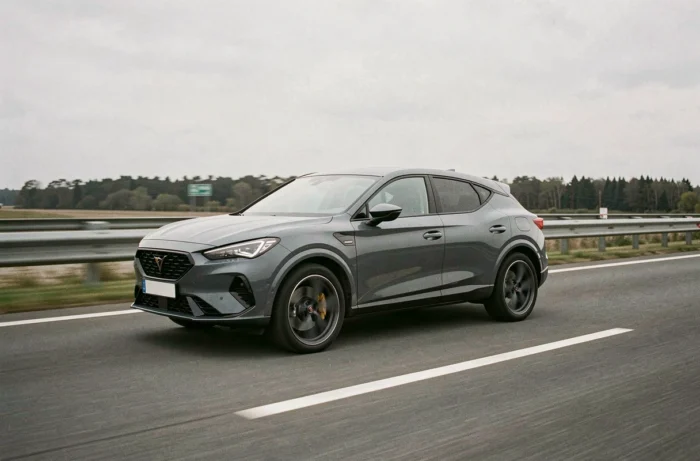
Cupra Formentor e-Hybrid in the City: Electric Range and Operating Silence
The latest generation e-Hybrid versions come with a battery of about 19 to 20 kWh usable. In strictly urban use, the Formentor PHEV can cover a complete daily trip in 100% electric mode, with the thermal engine turned off. The accelerator response is linear, with no vibrations.
The character of the vehicle then changes radically. The sporty SUV transforms into a silent and smooth vehicle, comfortable during frequent stops and parking maneuvers.
One point deserves special attention: the braking modulation requires an adjustment period on the plug-in hybrid versions. The transition between regenerative braking and mechanical braking introduces a break in the pedal feel, particularly noticeable during light braking in the city.
Real Consumption on the Highway Once the Battery is Depleted
Once the electric reserve is exhausted, consumption heavily depends on the chosen version and driving style. The differences observed between the various engine options in the range (from the 1.5 TSI to the most powerful units) are significant, and field feedback varies widely depending on the driver’s profile.
Space and Ergonomics: The Compromises of a Sporty Size
Rear legroom remains generous. Adult passengers travel comfortably on medium-duration trips. Up front, the bucket seats offer pronounced lateral support, appreciated in corners but sometimes restrictive for larger frames over long distances.
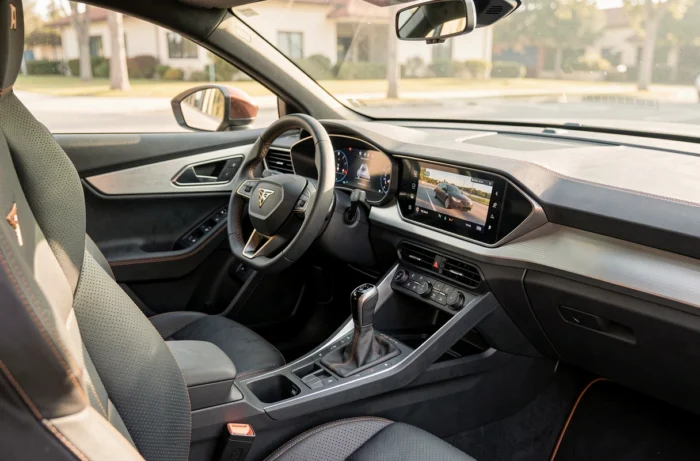
- The removal of physical controls in favor of a fully touch interface complicates quick adjustments while driving, despite a smooth and responsive central screen
- The trunk volume lags behind direct competitors in the C-SUV segment, a direct consequence of the sloping roofline
- The interior finish combines soft materials and careful assembly, but hard plastics reappear in the lower parts of the doors
DSG Gearbox and TSI Engine: Driving Pleasure Depending on the Engine
The 1.5 TSI 150 hp engine, paired with the 7-speed DSG gearbox, handles daily commutes. However, the lack of responsiveness at low revs hampers acceleration in the city. The gearbox sometimes hesitates between two gears during gradual accelerations, a behavior that some users regularly report with this mechanical combination.
The 2.0 TSI versions (from 204 to 333 hp) change the game. The torque, available earlier in the rev range, smooths out the acceleration. The transmission is more consistent in its gear shifts. The gain is not only measured in raw power: it is the overall coherence between engine, gearbox, and chassis that progresses to a higher level.
Driving Mode and Customization
The mode selector (Comfort, Sport, Cupra, Individual) affects the engine mapping, steering feel, accelerator response, and, on equipped versions, the firmness of the DCC.
The Individual mode allows for unusual combinations: light steering with firm damping, or vice versa. This modularity makes the Formentor adaptable to very different uses from one trip to another.
The balance between standard equipment, road behavior, and identified limitations (trunk, PHEV braking modulation, DSG enjoyment on the entry-level engine) remains to be weighed on a case-by-case basis, depending on annual mileage and the dominant type of journey.