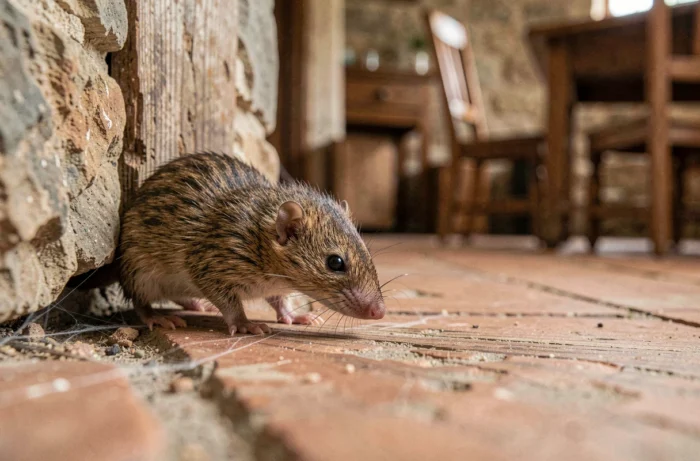
A small creature scurries along the baseboard, disappearing under a piece of furniture before you even have time to react. It’s not a mouse. Its snout is too long, too pointed. It’s a shrew, and its presence in your home is not trivial, either practically or in the collective imagination.
Protected shrew in France: what the law prohibits in your home
Before thinking about traps or poison, a legal point often overlooked deserves your attention. Several species of shrews are among the terrestrial mammals protected by the decree of April 23, 2007. Capturing, killing, or keeping them without a prefectural exemption constitutes an offense.
In practical terms, using lethal traps or rodenticides against a shrew can expose you to penalties if the species in question is protected. The shrew is also not listed among the species likely to cause damage (ESOD), which means it is not legally classified as a pest.
The only compliant option remains the live capture trap (net or cage), followed by a remote release. This detail radically changes the approach: where one might set a mouse trap without thinking, the shrew requires a more measured action.
Understanding the meaning and omen of the shrew in the house allows you to place this visit in both a practical and symbolic context before making a decision.
Presence of shrew in the house: what your habitat reveals
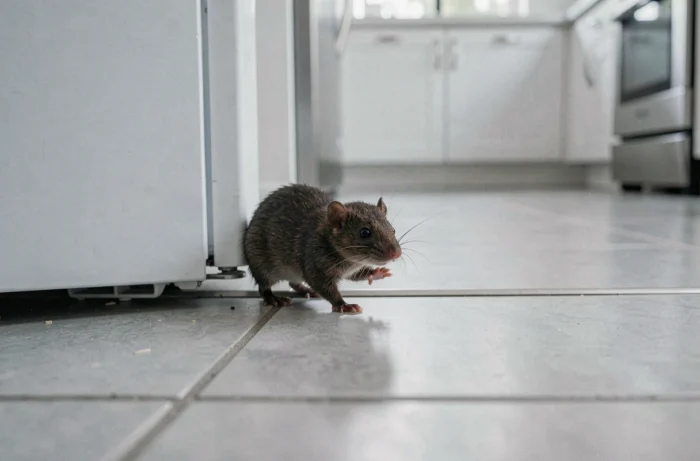
Have you noticed that the shrew never appears in a perfectly dry and airtight home? Its presence is a biological indicator of the state of your dwelling.
The shrew is an insectivore with a very fast metabolism. It eats almost continuously to survive. If it enters your home, it finds food there: insects, larvae, spiders. A shrew indoors often signals an invisible population of insects.
The reasons for its intrusion can be summarized in a few concrete factors:
- Cracks or open passages at the foundation level, door thresholds, or pipes, which provide easy access from the garden
- A high humidity level in the basement, garage, or crawl space, attracting the insects it feeds on
- A drop in outdoor temperatures that drives it to seek temporary shelter, with no intention of settling permanently
Rather than viewing the shrew as a problem, see it as a signal. If it returns regularly, it’s the airtightness and hygiene of your home that need to be examined first.
Shrew and omens: what popular traditions say
In several European cultures and beyond, the shrew carries a strong symbolic weight. It is associated with intuition, vigilance, and the ability to perceive what remains hidden.
This association stems from its observable behavior. The shrew moves quickly, explores its environment relentlessly, and detects its prey through vibrations and smell, much more than through sight. In popular traditions, the animal that perceives the invisible naturally becomes a messenger.
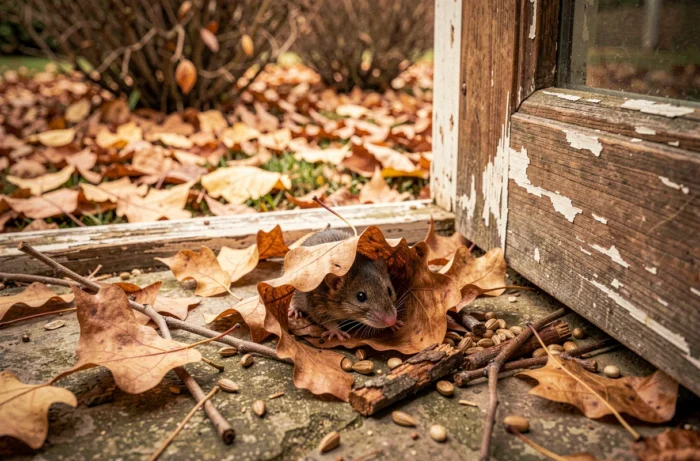
Some folk beliefs associate the visit of a shrew with an imminent change in the household. Others interpret it as a reminder to be cautious or an invitation to pay attention to neglected details. Does the shrew bring bad luck? No solid tradition designates it as a negative omen. Quite the opposite: its discretion and efficiency make it a positive symbol in French countryside, where it is known to be beneficial to gardens.
However, one must remain realistic. Spiritual interpretations have no scientific basis and vary significantly from region to region. What remains constant is the fascination that this tiny animal exerts on those who encounter it.
Shrew or mouse: distinguishing the two to act correctly
The confusion between shrew and mouse is the source of most treatment errors. The two animals are similar in size, but their differences are clear if you know where to look.
The shrew has an elongated, pointed snout, very small eyes, and ears that are barely visible under its fur. The mouse has a rounded snout, large ears that are well exposed, and proportionally larger eyes. Their droppings also differ: those of the shrew emit a characteristic musky odor, linked to its lateral glands.
Behaviorally, the difference is radical. The shrew does not gnaw on cables, walls, or provisions. It only attacks invertebrates. The material damage sometimes attributed to a shrew is almost always the work of a rodent.
- If you find chewed wires or punctured packaging, look for a mouse or a field mouse, not a shrew
- If you notice a musky odor in a damp corner without visible damage, the shrew is the most likely suspect
- If the animal you spotted was moving very nervously, almost frantically, that’s typical shrew behavior, linked to its intense metabolism
Keeping a shrew away without harming it: the appropriate actions
Since the shrew is potentially protected and causes no material damage, the logic is simple: guide it out without harming it.
A baited cage trap with a few insects or a piece of fruit allows for live capture. Release it about a hundred meters away, in a vegetated area. Sealing entry points remains the only sustainable prevention: expanding foam in cracks, intact threshold seals, grilles on ventilation openings.
Reducing indoor humidity and addressing any potential insect proliferation eliminates what attracts it. Without food or access, the shrew has no reason to return. The garden, on the other hand, suits it perfectly: it regulates populations of slugs, larvae, and pest insects far more effectively than chemical treatments.
The shrew in the house tells two stories at once. The first speaks of cracks, humidity, and hidden insects. The second, older, speaks of vigilance and fine perception. Both deserve attention before taking action.