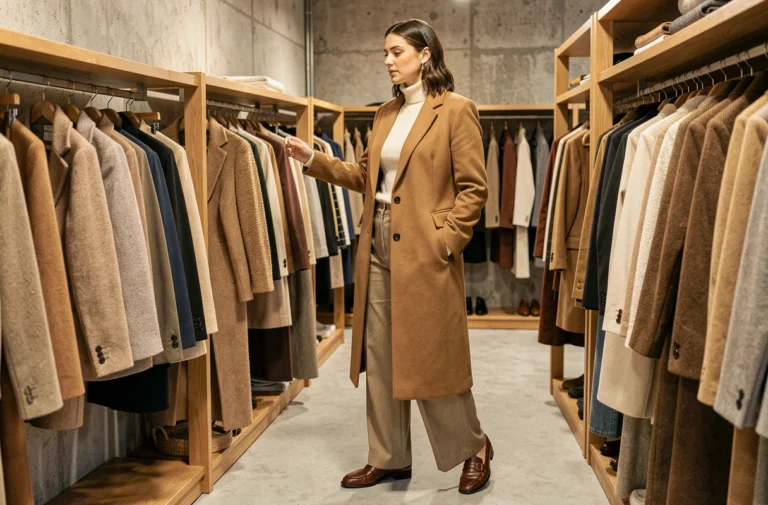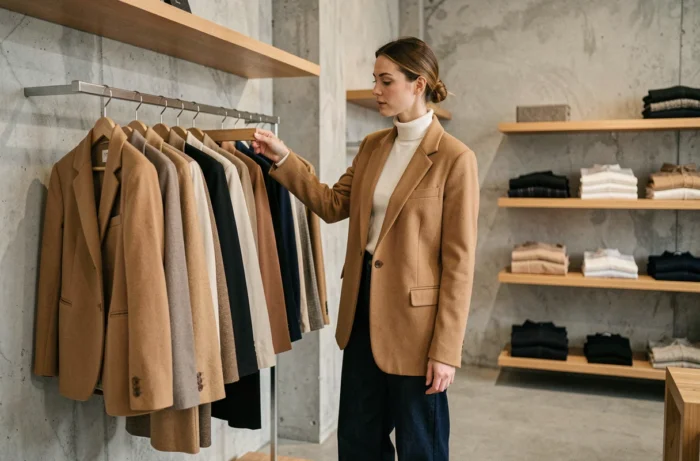
This autumn, the runways and editorial analyses converge towards a more expressive wardrobe, where textures, layering, and color contrasts replace the default black minimalism. The real challenge begins when putting on these pieces: how to integrate a checkered print or a saturated palette into your wardrobe without looking like a mannequin out of sync with your daily life.
Wearing deep and saturated colors without overwhelming an autumn look
The change in palette is the clearest signal of the season. Trend analyses from late August 2026 document a shift: very dark and monochrome shades give way to deep colors paired with saturated accents. Bordeaux, forest green, and midnight blue combine with touches of saffron yellow or bright red.
The right balance makes all the difference. One saturated piece per outfit is enough. A bordeaux sweater with charcoal pants works for both the office and the weekend. Two saturated pieces (red jacket + mustard skirt) require a more relaxed context and a structured silhouette to avoid a costume-like effect.
For those hesitant to leave black behind, a good entry point remains accessories: a scarf in a deep blue or a bag in a rich bordeaux. You can test the color without overhauling your wardrobe, and you can explore fashion with Masca Online to find pieces in these color ranges.
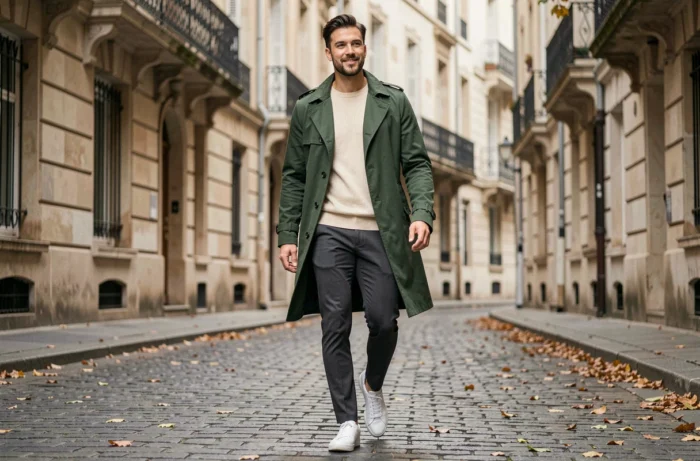
Checkered prints autumn 2026: usage context and traps to avoid
Checks are among the strongest signals this autumn. However, a poorly calibrated checkered print can turn anyone into a character from a 1990s sitcom. The key lies in the choice of pattern scale according to the context.
- At the office, opt for a discreet check (like prince of wales) on high-waisted pants or a structured blazer. The rest of the outfit should remain solid to let the pattern breathe.
- On the weekend, a larger check (like a reimagined lumberjack) works on an open overshirt, paired with raw jeans and ankle boots. The relaxed context absorbs the boldness of the pattern.
- In the evening or at events, a windowpane check on a dress or suit creates an elegant graphic effect without excess.
The classic trap: mixing two checkered prints of different sizes. On a runway, the contrast is controlled by a stylist. In real life, the result muddles the silhouette.
Preppy style and structured office wardrobe: adapting the trend to your body type
The return of the preppy wardrobe, documented by several sources for autumn 2026, does not mean putting on an American campus uniform. The trend consists of reintroducing structured pieces into everyday outfits: fitted blazers, pleated trousers, button-down shirts, and cable-knit sweaters.
A common mistake is to wear everything at once. An entirely preppy look (blazer + shirt + pleated trousers + loafers) can appear costumed outside of a strict professional context. The practical rule: one or two structured pieces maximum, with the rest in softer materials.
Adapting to your silhouette
A double-breasted blazer visually elongates the torso. It suits silhouettes that want to accentuate the waist. A straight blazer, more casual, works on broad shoulders without adding volume. The pleated trousers, on the other hand, create volume at the hips: an asset for slender body types, a point of caution for others.
Budget also plays a role. A well-cut blazer in a decent fabric is a lasting investment. A cable-knit sweater in cheap synthetic fibers loses its shape after a few washes and ruins the desired effect. It’s better to have one quality piece than a complete fast fashion wardrobe that won’t last through the winter.
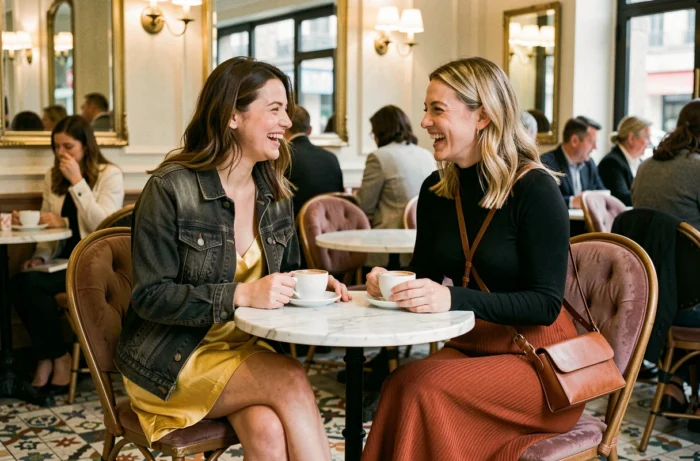
Layering and textures: building an autumn look without costume effect
Layering is the stylistic thread of the season. Recent analyses describe an autumn-winter 2026 focused on expressive layered dressing and contrasts of materials. Wool over silk, leather over knit, denim over flannel: each layer adds a visual and tactile dimension.
The basic principle: vary textures rather than colors. An outfit in close tones (camel, beige, ecru) gains depth if each piece brings a different material. A fine turtleneck under a chunky knit vest, all under a wool overcoat, creates three levels of interest without any loud colors.
Layering at the office versus on the weekend
At the office, layering remains discreet: a V-neck sweater over a shirt, a jacket on top. A maximum of two visible layers under the jacket. On the weekend, the freedom increases. An open flannel overshirt over a t-shirt, with a cropped jacket, produces a relaxed effect that plays with proportions.
The trap to avoid: too many thick layers that weigh down the silhouette. Each layer should be thinner than the previous one starting from the body. If the under-sweater is thicker than the jacket, the whole outfit pulls and buckles.
This season, black is no longer the default neutral in several editorial readings. Earthy tones, bluish grays, and warm browns offer richer bases for building layers. A slate gray coat with a rust sweater and chocolate pants tells more than an all-black look, without taking more risks.
Autumn 2026 fashion rewards those who balance rather than those who accumulate. A well-chosen checkered print, one saturated color, two layers of different textures: that’s often all it takes for the silhouette to work.