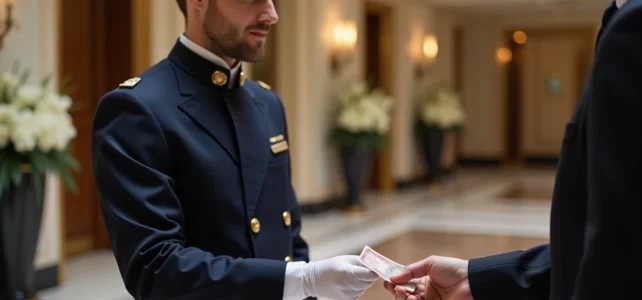
You hand a bill to the valet, but you hesitate about the amount. Too little, and the gesture seems awkward. Too much, and you wonder if it was expected. Tipping in a 5-star hotel follows specific codes that vary by country, the service provided, and the staff involved. Here’s how to decode them without making a mistake.
Automatic gratuity and service charge: what changes the game in luxury hospitality
Before even thinking about the amount, check your bill. Many high-end establishments, particularly in New York, now apply an automatic gratuity or service charge to the tabs of bars, restaurants, and lounges within the hotel. This extra charge already covers the staff’s compensation.
Specifically, if your bill mentions a service charge, adding a tip means paying for the same service twice. Look for the line “gratuity” or “service” on the receipt before slipping in an extra bill. This precaution saves you from unnecessary spending and an awkward moment for the server who will have to explain the duplicate.
Practices surrounding tipping in a 5-star hotel therefore depend primarily on the establishment’s pricing policy, not just on the quality of service received.
Recommended amounts by type of hotel staff
Not all employees in a luxury hotel receive tips in the same way. The gesture varies depending on the service provided, its duration, and whether it is occasional or daily.
Housekeeping and maintenance staff
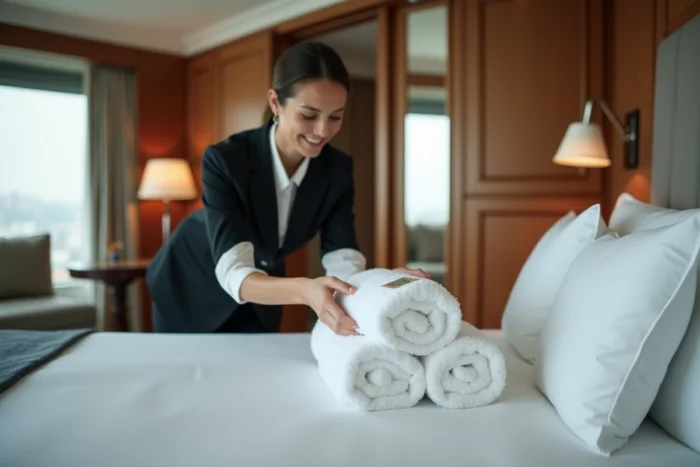
Housekeeping staff are often the forgotten ones. Leaving a tip each morning on the bedside table (and not on the last day) allows you to thank the person who actually cleaned your room. A bill per day is the norm in North American luxury hotels.
In France, the practice is less systematic. The amount is at your discretion, but a daily gesture, even modest, will be better received than a single sum at departure.
Doorman, bellhop, and valet
The doorman who hails a taxi, the bellhop who carries your bags, the valet who parks your vehicle: each one-time intervention calls for an immediate tip. The amount depends on the number of bags and the complexity of the request.
Concierge
The concierge of a 5-star hotel can secure a reservation at a fully booked restaurant or organize a custom excursion. The tip for the concierge is given at the end of the stay, depending on the extent of the services rendered. The more complex the request, the more substantial the expected gesture.
Servers and bartenders
In the absence of a service charge on the bill, tips at the hotel restaurant or bar follow local customs. In France, the bill includes service. In the United States, expect to tip the same percentage as in any restaurant.
Tip in a 5-star hotel: rules change by country
Applying the same logic everywhere is the best way to make a faux pas. Each country has its own cultural codes around tipping.
- In France, service is included in the restaurant bill and the salaries of hotel staff. Tipping remains a gesture of satisfaction, never an obligation. A few euros for the bellhop or housekeeping staff is sufficient.
- In the United States, tipping constitutes a significant part of service workers’ income. Not leaving a tip in a luxury hotel would be seen as an affront.
- In Nordic countries (Norway, for example), hotel salaries are higher, and the practice of tipping remains limited. A small rounding up or a small percentage for exceptional service is enough.
- In Japan, tipping is considered inappropriate, even insulting, even in high-end hotels. Staff will politely but firmly refuse your bill.
- In all-inclusive resorts (Caribbean, Mexico), recent experiences show an increase in cash tips to staff. Several bills per day for servers, bartenders, and doormen significantly influence the quality of service received: priority at the bar, better attention, personalized little touches.
When and how to give a tip in a luxury hotel
Timing is as important as the amount. A tip given at the wrong moment loses part of its effect.
Immediate tip or at the end of the stay
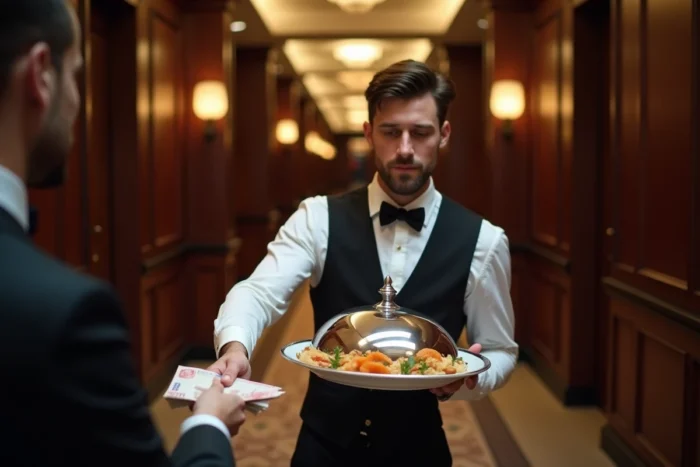
For one-time services (luggage, valet, room service), the tip is given on the spot, in person. For recurring services (housekeeping), a daily gesture is preferable. The concierge, however, is thanked at the time of departure.
Cash or credit card
Cash remains the preferred method in most luxury hotels. Prepare small denominations in local currency before your arrival. Some establishments allow you to add a tip to the room bill, but staff generally prefer to receive cash directly.
Discretion and naturalness
In a 5-star hotel, the tip is discreetly slipped in. No theatrical gestures, no bill brandished high. A handshake with the folded bill, an envelope on the bedside table for the housekeeper: discretion is part of the code.
Luxury hotel tipping: pitfalls to avoid
Giving a tip to the wrong person creates embarrassment. Never attempt to hand a bill to the hotel manager or the front desk supervisor. These positions are not involved in the practice.
Another common pitfall: concentrating all the tips on a single visible employee (the concierge) while forgetting the housekeeping staff who work behind the scenes. Distributing your tips among the various services reflects an understanding of how the hotel operates.
Finally, inform yourself about the destination before departure. Offering a tip in Japan, even with the best intentions, will be misinterpreted. Conversely, leaving a Caribbean resort without having left cash for the staff who served you for a week will send a negative signal.
The most reliable rule remains to inquire at the front desk upon arrival. A simple “what is the practice here for tips?” will avoid any misunderstanding and show the staff that you respect local customs.