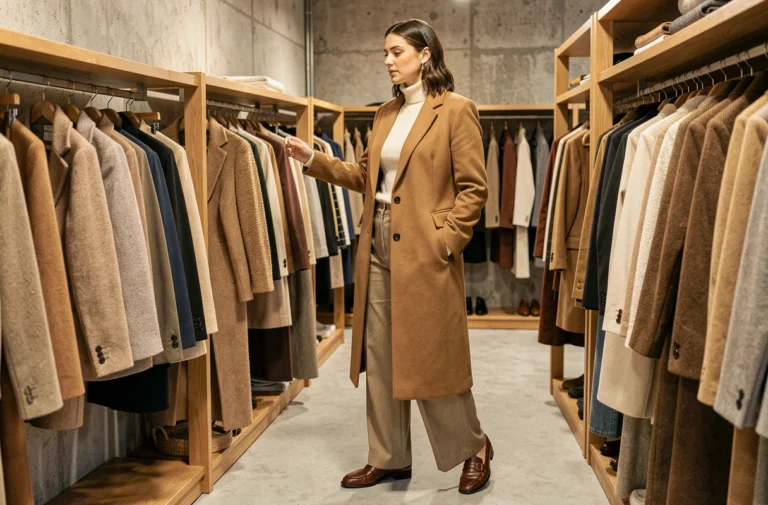
Choosing your clothes in the morning shouldn’t feel like a chore. Yet, many people accumulate unrelated pieces, complicating every outfit. Current fashion and wellness trends offer a different approach: fewer pieces, better thought-out, and a daily style that considers comfort as much as appearance.
Materials and Comfort: How Textiles Change Your Clothing Well-Being
Have you ever noticed that stiff pants put you in a bad mood right from the morning? It’s not insignificant. The choice of materials directly influences how we feel in our clothes, and by extension, how we feel throughout the day.
For a few seasons now, designers have been integrating technical textiles into classic cuts. A stretch fabric blazer, for example, offers the freedom of movement of a sweatshirt while maintaining a structured look. Esther Ducard, senior consultant at NellyRodi, summarizes this evolution: designers are reconciling well-being and elegance instead of opposing them.
In practical terms, this means that office suits are no longer rigid. Blended fibers (cotton-elastane, wool-viscose) allow for pieces that breathe and move with the body instead of constraining it. To enhance your daily style, prioritize materials that don’t force you to choose between comfort and appearance.
On Camille Un Point C’est Tout’s blog, this convergence between fashion and well-being is analyzed through concrete looks, adapted to real life.

Well-Being Minimalism: Building a Daily Style with Fewer Pieces
Clothing minimalism doesn’t mean wearing black every day. It’s more about reducing the number of pieces to increase their coherence. This trend, sometimes referred to as well-being minimalism, goes beyond the wardrobe: it also impacts lifestyle, time management, and the mental load associated with daily choices.
The basic idea is simple. Instead of buying a piece for every micro-trend (a color, a cut, a pattern), you select clothes that work together. A good test: each new piece should pair with at least three others already in your wardrobe.
Criteria for an Effective Minimalist Wardrobe
- Color Versatility: favor a base palette (beige, navy, off-white, gray) to which you can add one or two seasonal shades, like the butter yellow that appeared on the spring-summer runways
- Cuts that transition across contexts: a flowy pant worn at the office, on a terrace, or over the weekend avoids multiplying bottoms in the closet
- Durable and easy-care materials: a garment you hesitate to wear for fear of damaging it ends up never leaving the hanger
This sorting doesn’t require emptying your closets all at once. Start by identifying the five pieces you wear most often. They reveal your true preferences in cut, color, and material, much better than an online body shape quiz.
Adapting Fashion Trends to Your Body Shape Without Complicating Life
Classic body shape guides (A, V, H, O, X) remain useful as a starting point. The problem is that they can rigidify choices. A woman with an A silhouette is systematically advised to wear structured tops and flared bottoms, without considering her tastes or lifestyle.
Body shape guides provide direction, but comfort validates. A barrel jean, a key cut of the season, can suit very different silhouettes if the waist is well-fitted and the length is appropriate for the shoes worn. The decisive criterion is not the theoretical shape of the body, but the actual sensation once the piece is on.
Three Questions More Useful Than a Body Shape Guide
Why these questions? Because they place feelings at the center of clothing choices, rather than relying solely on a body shape diagram.
- What area of your body do you prefer to highlight? Answering this question naturally guides you toward flattering cuts without forcing a category
- What is your most frequent discomfort gesture (pulling at a hem, adjusting a strap, tightening a belt)? This gesture reveals a recurring fit issue that needs correction
- Do you wear your trendy clothes more than three times a month? If the answer is no, the piece doesn’t match your actual daily style, regardless of the trend
Seasonal Colors and Well-Being: How Shades Influence Your Look
Colors are not just about aesthetics. Certain shades return each season because they respond to a collective demand related to mood and social context. Warm and reassuring tones (camel, terracotta, burgundy) dominate autumn-winter collections. Bright pastels and butter yellow assert themselves in spring-summer.
Choosing a color that makes you feel comfortable is just as important as following the current palette. A dress in the season’s trendy shade won’t enhance anything if you spend the day feeling disguised. The practical rule: keep your basics in neutral tones and reserve bold colors for accessories or one standout piece per outfit.
This approach aligns with the well-being minimalism mentioned earlier. Fewer colorful pieces, but confidently worn colorful pieces, create a stronger effect than a total seasonal look copied from a runway.
Soft Tailoring: Fashion Trend Redefining the Office Wardrobe
The classic suit, which imposes a posture and forbids running for a bus, belongs to another era. Soft tailoring, on the other hand, is gaining ground because it meets the demands of hybrid work. We move from the office to a lunch to a video call without changing.
An unstructured blazer worn over a cotton t-shirt constitutes a credible office look today. Dropped shoulders, removed linings, and simplified closures lighten the silhouette while maintaining a clean line. Pleated trousers are making a comeback, but in fluid fabrics that don’t cling.
This shift toward softness isn’t just for women. Men’s wardrobes are following the same trajectory, with unlined suits and knit shirts replacing starched poplin.
Daily style isn’t built by following every fashion trend to the letter. It relies on pleasant materials, cuts suited to your real life, and colors that reflect who you are. Current well-being trends confirm this direction: simplify to choose better, wear less but wear better.